
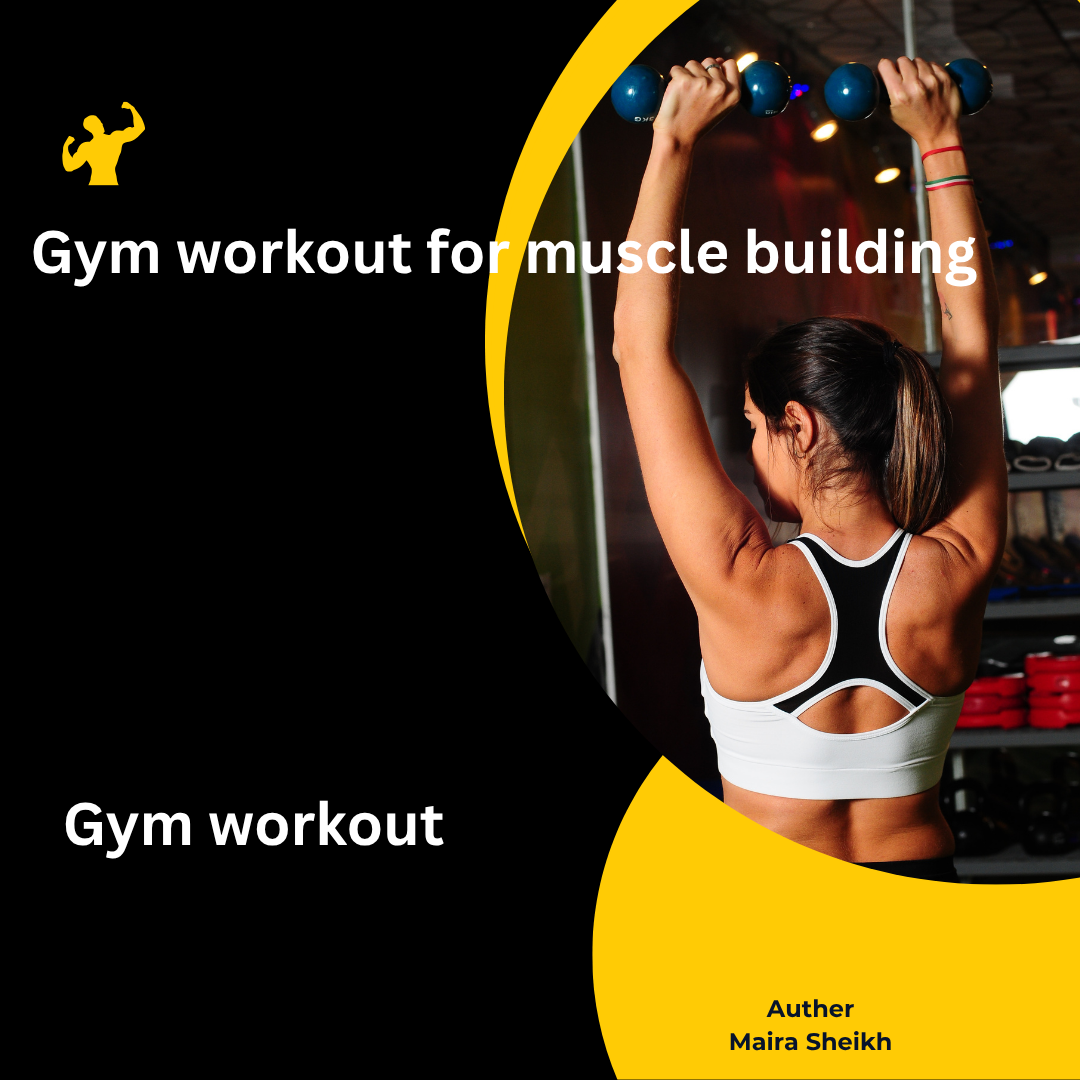
Introduction| What is muscle building| Benefits of muscle building workouts| Key principles of muscle building| Gym workout plan for muscle building| Essential exercises for muscle growth| Weekly workout split for muscle building| Diet plan for muscle building| Common mistakes to avoid| Tips to maximize muscle growth| FAQS| Conclusion|
Introduction:
What is Muscle Building?
Muscle building means increasing the size and strength of your muscles through regular exercise. This happens when you lift weights or perform resistance training. Your muscles get tiny tears during workouts, and when they repair, they grow bigger and stronger.
Benefits of Muscle Building Workouts
Building muscle is not just about looking good. It also improves your overall health. Here are some key benefits:
- Increases body strength
- Helps burn more calories
- Improves posture
- Boosts confidence
- Supports bone health
How Gym Workouts Help in Muscle Growth
The gym provides equipment like dumbbells, barbells, and machines. These tools help you target specific muscles and train them effectively. This makes your muscle growth faster compared to random workouts.
Key Principles of Muscle Building
Progressive Overload
To grow muscles, you must challenge them. This means slowly increasing the weight, repetitions, or sets in your workouts. If you keep using the same weight, your muscles will not grow.
Importance of Consistency
You cannot build muscle in a few days. You need to work out regularly, at least 3 to 5 times a week, to see good results.
Role of Rest and Recovery
Rest is very important. Your muscles grow when you are resting, not when you are exercising. Try to sleep 7 to 8 hours every night.
Nutrition and Protein Intake
Protein is the most important nutrient for muscle growth. Foods like chicken, eggs, milk, lentils, and fish are great sources of protein.
Best Gym Workout Plan for Muscle Building
Beginner Workout Routine (3 Days Plan)
If you are new to the gym, start with a simple plan:
- Day 1: Chest and Triceps
- Day 2: Back and Biceps
- Day 3: Legs and Shoulders
Focus on learning proper form instead of lifting heavy weights.
Intermediate Workout Routine (4 to 5 Days Plan)
Once you gain some experience, you can increase your workout days:
- Day 1: Chest
- Day 2: Back
- Day 3: Legs
- Day 4: Shoulders
- Day 5: Arms
This allows you to focus more on each muscle group.
Advanced Workout Routine (6 Days Split)
Advanced users can train 6 days a week:
- Day 1: Chest
- Day 2: Back
- Day 3: Legs
- Day 4: Shoulders
- Day 5: Arms
- Day 6: Full Body or weak muscles
Essential Exercises for Muscle Growth
Chest Exercises (Bench Press, Push Ups)
These exercises help build a strong and wide chest. Bench press is one of the best strength training exercises.
Back Exercises (Pull Ups, Deadlifts)
Back exercises improve posture and build a strong upper body.
Leg Exercises (Squats, Lunges)
Leg workouts are very important because they build overall strength and balance.
Shoulder Exercises (Overhead Press, Lateral Raises)
These exercises help create broad and strong shoulders.
Arm Exercises (Biceps Curls, Triceps Dips)
Arm workouts help improve the size and strength of your biceps and triceps.
Weekly Workout Split for Muscle Building
Push Day (Chest, Shoulders, Triceps)
Push exercises involve pushing weights away from your body.
Pull Day (Back, Biceps)
Pull exercises involve pulling weights toward your body.
Leg Day (Quads, Hamstrings, Calves)
Leg day focuses on your lower body muscles.
Diet Plan for Muscle Building
Importance of Protein Rich Foods
To build muscle, you should eat enough protein every day. Aim for about 1.6 to 2.2 grams of protein per kilogram of body weight.
Pre Workout and Post Workout Meals
- Pre workout: Eat carbs and protein (banana + eggs)
- Post workout: Eat protein and carbs (chicken + rice)
This helps give you energy and supports recovery.
Hydration and Supplements
Drink plenty of water throughout the day. Supplements like whey protein and creatine can help, but they are not necessary.
Common Mistakes to Avoid
Overtraining
Working out too much can lead to injury and slow down your progress.
Poor Form and Technique
Always use the correct form. Lifting heavy weights with bad form can cause injuries.
Skipping Warm Up and Cool Down
Warm up prepares your body, and cool down helps prevent soreness.
Ignoring Nutrition
Without a proper diet, your muscles will not grow, no matter how hard you train.
Tips to Maximize Muscle Growth
Track Your Progress
Write down your workouts to see improvements over time.
Increase Weights Gradually
Slowly increase your weights to keep challenging your muscles.
Get Enough Sleep
Sleep is very important for recovery and muscle growth.
Stay Motivated and Disciplined
Stay consistent and focused on your goal.
Frequently Asked Questions (FAQs)
1. How long does it take to build muscle?
You can start seeing results in 4 to 8 weeks with regular training and proper diet.
2. Can beginners build muscle quickly?
Yes, beginners often gain muscle faster in the beginning.
3. Is cardio necessary for muscle building?
Yes, but do it in moderation to avoid losing muscle.
4. How much protein do I need daily?
About 1.6 to 2.2 grams per kilogram of body weight.
5. Can I build muscle at home?
Yes, but gym workouts give better and faster results.
6. Should I lift heavy weights?
Yes, but light and increase gradually.
7. How many days should I work out?
3 to 6 days per week is ideal.
8. Do supplements help in muscle building?
They help, but they are not necessary.
9. What is the best time to work out?
Any time that you can stay consistent with.
10. Why am I not gaining muscle?
You may not be eating enough, training properly, or resting enough.
Conclusion
Final Thoughts on Gym Workout for Muscle Building
Building muscle is simple if you follow the right steps. Focus on proper workouts, eat enough protein, and give your body time to rest. Stay consistent and patient, because muscle building takes time. If you follow a good gym workout for muscle building, you will see strong and lasting results.