
Introduction:
An effective home workout for weight loss combines three to four weekly sessions of cardio and bodyweight strength training with a modest calorie deficit. You do not need a gym membership. You do not even need equipment.
What you need is a plan you will actually repeat. This guide covers your setup, the exercises worth doing, a four week schedule, the food side of the equation, and the mistakes that quietly stall progress.
Key Takeaways
- Three to four sessions a week of 20 to 40 minutes is enough for beginners to start losing fat.
- A calorie deficit drives weight loss. Exercise supports it but rarely replaces it.
- Mix cardio with bodyweight strength moves so you burn calories now and keep muscle while you lose fat.
- Increase difficulty every two weeks by adding rounds, work time or harder variations.
- Track waist measurements, photos and rep counts, not just the scale.
- Consistency beats intensity. A routine you can repeat is the best routine.
Why Home Workouts Work for Weight Loss
Training at home removes the usual excuses without removing the results. The body responds to effort, not to scenery.
Calories burned vs. gym workouts
Calories burned depend on how hard you work, how long you go and how much you weigh. The building has nothing to do with it. A 30-minute circuit of squats, jumping jacks and mountain climbers done at a hard effort can burn about as much as a similar effort session on a gym treadmill.
Gyms do offer heavier weights, and that matters later. For a beginner, though, your own bodyweight already provides plenty of resistance.
The consistency advantage of training at home
Weight loss rewards the person who shows up for months, not the person who trains brutally for two weeks. Home training strips away the friction that breaks routines:
- No commute or parking.
- No waiting for a machine.
- No closing hours.
- No need to find childcare or a perfect outfit.
Fewer obstacles mean more completed sessions. More completed sessions mean results.
How to Set Up Your Home Workout Space
You can start today with what you own. A few cheap additions make training more comfortable and more varied.
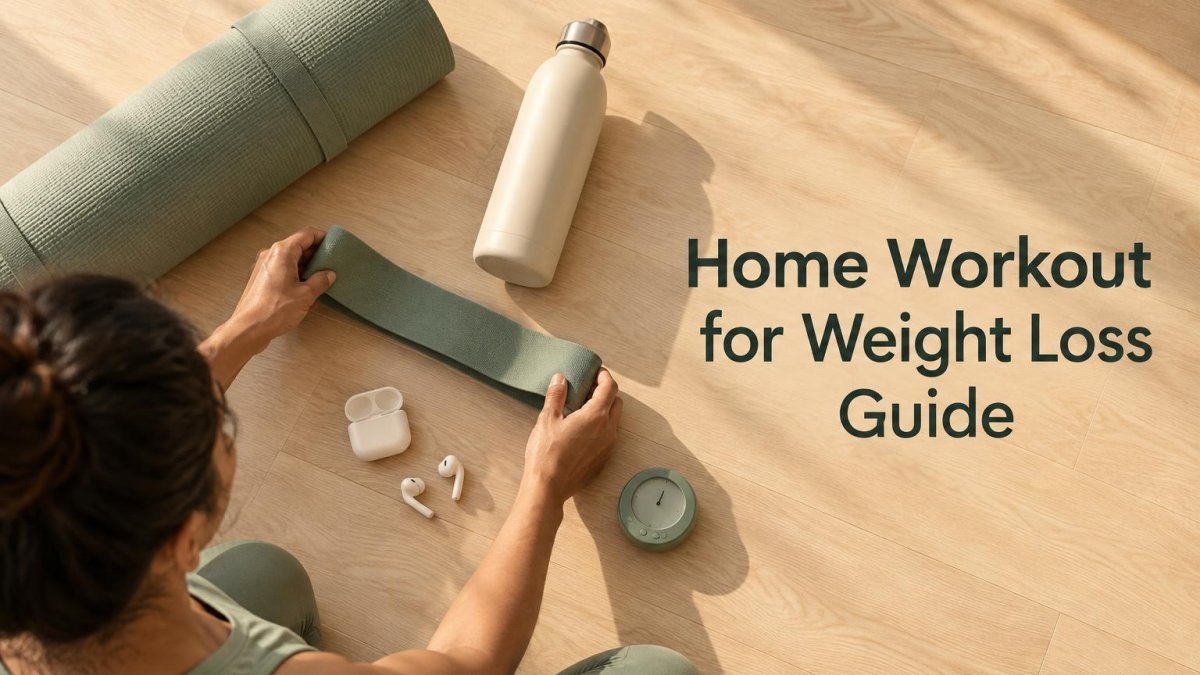
Minimum equipment you actually need
A no equipment workout for weight loss works fine for the first month. When you are ready to add a little, this short list covers almost everything:
- Supportive athletic shoes
- An exercise mat for floor work
- A set of resistance bands (stretchy elastic loops that add tension to pulling and pushing moves)
- One or two dumbbells, or a backpack filled with books
- A sturdy chair or bench for step-ups and incline push-ups
- A phone timer
Choosing the right workout area
Clear roughly a six by six foot square. That is enough room to lunge, lie down and swing your arms. Check the ceiling height before you attempt jumping moves.
Hard floors are tough on joints, so work on a mat or carpet when you can. Living in an apartment? Swap jumps for low-impact versions like step jacks, which keep your heart rate up without thudding on the floor.
The Best Exercises to Burn Fat at Home
The best home workouts to burn fat pair movements that raise your heart rate with movements that load your muscles. Here are at home weight loss exercises worth building around.
Cardio moves that spike your heart rate
Cardio simply means any movement that raises your heart rate and breathing for a sustained period. A good home cardio workout for beginners feels hard but still lets you speak in short sentences.
- Jumping jacks (or step jacks for low impact)
- High knees
- Mountain climbers
- Skaters (side to side lateral hops)
- Fast marching in place with big arm swings
Strength moves that build calorie-burning muscle
Muscle tissue costs energy to maintain, so keeping and building it supports fat loss over time. The effect is modest, but it adds up. Strength training also stops you from losing muscle while you shed weight.
- Bodyweight squats
- Incline push-ups (hands on a counter or chair)
- Reverse lunges
- Glute bridges
- Band rows (pulling a band toward your ribs)
Core exercises that support fat loss
Your core is the group of muscles around your trunk that stabilizes your spine and pelvis. Strong ones improve your form on every other move. They do not burn belly fat directly, since fat cannot be targeted by exercising one spot.
- Plank
- Dead bug
- Bird dog
A 4 Week Home Workout Plan for Weight Loss
This full body home workout fat loss plan uses six movements per session and nothing else. As a health writer on Medium, I kept it deliberately simple, because a plan you can remember is a plan you will finish.
Start every session with five minutes of easy marching, arm circles and bodyweight squats. End with a few minutes of gentle stretching.
Week 1 to 2: Building the base
Train three days a week, for example Monday, Wednesday and Friday. Add a 20 to 30 minute walk on two other days.
- Set a timer for 40 seconds of work and 20 seconds of rest.
- Do the circuit below in order.
- Rest for one to two minutes after the last move.
- Complete three rounds total.
The circuit: bodyweight squats, incline push-ups, march or high knees, glute bridges, dead bug, plank.
This is a solid weight loss workout routine at home for week one because it keeps effort moderate. Finish each session feeling tired but not wrecked.
Week 3 to 4: Increasing intensity
Move to four sessions a week, keeping at least one rest day between two of them. Change the timing to 45 seconds of work and 15 seconds of rest, and complete four rounds.
Swap in tougher versions:
- Jumping jacks instead of marching
- Floor push-ups (or lower incline)
- Reverse lunges instead of squats
- Skaters
- Mountain climbers
- Plank, held for the full 45 seconds
Hold the walks on your off days. They burn extra calories and aid recovery without adding stress.
How to Adjust Nutrition to Support Your Results
Workouts build fitness. Food mostly decides the scale. If you are wondering how to lose weight working out at home, the answer is training consistently while eating a bit less than you burn.
Simple calorie targets for weight loss
A calorie deficit means eating fewer calories than your body uses in a day. Use an online calorie calculator to estimate your maintenance level, then aim for a few hundred calories below it. Bigger cuts feel dramatic but tend to collapse within weeks.
Protein deserves special attention. Include a palm-sized serving at each meal to keep hunger down and protect muscle. If your weight stalls for several weeks, trim portions slightly or add more daily walking before cutting further.
Foods that fuel your home workouts
Eat mostly foods that are filling and simple to prepare:
- Eggs, Greek yogurt and cottage cheese
- Chicken, fish, tofu and beans
- Oats, rice, potatoes and fruit
- Vegetables at nearly every meal
- Plenty of water
Training on an empty stomach is fine for some people and miserable for others. If you feel weak, have a small carbohydrate snack, like a banana, an hour before you begin. Afterward, eat a meal with protein.
Common Mistakes That Slow Down Weight Loss at Home
Most stalls trace back to a handful of avoidable habits.
- Doing too much, too soon. Soreness and burnout end more programs than boredom does.
- Trying to outwork your plate. A single workout burns less than most people guess, and a snack can erase it.
- Skipping strength work. Cardio alone can leave you smaller but softer.
- Never progressing. If the workout feels easy, add reps, rounds or a harder variation.
- Sloppy form. Rushed reps reduce results and raise injury risk.
- Drinking calories. Sodas, sweetened coffee and juice add up silently.
- Neglecting sleep. Short nights raise hunger and sap workout quality.
How to Track Progress and Stay Motivated
Weight fluctuates daily from water, salt and digestion. One bad morning means nothing.
Tracking methods beyond the scale
Since SEO is my background, I like to treat training like a test: change one variable, then check the result. Apply that by using several measures at once.
- Waist measurement once every two weeks
- Front and side photos in the same lighting
- Rep counts and plank times written in a notebook
- How your clothes fit
- Energy levels and sleep quality
If two or three of these improve while the scale sits still, you are likely losing fat.
Building habits that last
Pick fixed days and times, and treat them like appointments. Lay out your workout clothes the night before. On rough days, commit to a ten-minute version rather than skipping entirely.
Attach training to something you already do, such as right after your morning coffee. Small wins repeat. Big plans fade.
Frequently Asked Questions
1.How many days a week should I work out at home to lose weight?
Three to four days a week suits most beginners. Add easy walking on other days if you want extra calorie burn. Rest days matter, because recovery is when your body adapts.
2.Can I really lose weight with no equipment at home?
Yes. Bodyweight squats, push-ups, lunges and cardio moves provide enough challenge for the first several months. Weight loss still depends on keeping a calorie deficit through your eating.
3.How long does it take to see weight loss results from home workouts?
Many people notice better energy and stamina within two to three weeks. Visible changes in your body and clothes typically take longer, often a month or more. Pace varies with starting point, nutrition and consistency.
4.What is the best time of day to do a home workout for weight loss?
The best time is the one you will keep. Morning sessions suit people who want it done before the day gets busy, while evening sessions work for those who feel stronger later. Pick a slot and stay with it.
5.Should I do cardio or strength training at home to lose fat faster?
Do both. Cardio burns more calories during the session, while strength training helps you hold onto muscle as you lose weight. A mixed circuit, like the plan above, covers both in one workout.
6. How Long Should a Home Workout for Weight Loss Last?
Aim for 20 to 40 minutes, including a 5-minute warm-up and a short cool-down. That is enough time for a full body circuit of six to eight exercises. Longer sessions are not necessary, and shorter ones still count on busy days. Consistency matters more than duration.
7. How Much Weight Can I Safely Lose per Week?
A common guideline is about 0.5 to 1 kg (1 to 2 pounds) per week. Faster loss is more likely to cost muscle and energy and is harder to maintain. Early drops can include water weight, so judge your progress over a month rather than a few days.
8. Can I Lose Belly Fat with Home Workouts?
You cannot choose where your body loses fat. A 2011 study by Vispute and colleagues in the Journal of Strength and Conditioning Research found that six weeks of abdominal exercise did not reduce abdominal fat. Overall fat loss, driven by a calorie deficit, regular full body training, and daily movement, is what gradually slims the waist. Core exercises still build strength and posture.
9. Why Am I Not Losing Weight Even Though I Work Out at Home?
Common reasons include eating more than you realize, water retention from new training, gaining muscle while losing fat, poor sleep, and low movement outside your workouts. Track your food honestly for two weeks and compare measurements, photos, and strength alongside the scale. If nothing changes after three to four weeks, trim calories slightly or add daily walking.
10. How Do I Make My Home Workouts Harder as I Lose Weight?
Change one thing at a time. Add a few reps, an extra round, or a few seconds of work, slow each rep to a three-second lowering phase, or shorten your rests. You can also move to harder variations, such as incline to full push-ups, or hold a backpack with books during squats and lunges. Small, steady increases keep results coming.
Conclusion
A home workout for weight loss works best when it is simple, consistent, and paired with sensible eating. Three to four sessions a week of squats, push-ups, lunges, bridges, planks, and a little cardio train your whole body, burn energy, and help you keep muscle while you lose fat. You do not need equipment or a gym to get started.
Remember that weight loss depends mainly on a modest calorie deficit, so combine your workouts with balanced meals, daily walking, and 7 to 9 hours of sleep. Aim for steady loss of about 0.5 to 1 kg per week, and track more than the scale, including measurements, photos, energy, and how many reps you can do.
Pick a time, put your sessions in your calendar, and finish your first workout this week. Stay consistent for at least 12 weeks, and the small habits you build now will add up to lasting results.