Introduction:
A good morning workout routine at home takes 20 minutes and needs no equipment. Spend 3 minutes warming up, 12 minutes on a bodyweight circuit, and 5 minutes stretching. That’s the whole plan.
You can do it in pajamas, in a hallway, before the coffee finishes brewing. The routine below covers lower body, upper body and core, and it scales from first-week beginner to someone who wants a real challenge.
Key Takeaways
- A 20 minute morning workout at home is enough to build a steady exercise habit.
- The plan has three parts: a 3 minute warm up, a 12 minute bodyweight circuit, and a 5 minute stretch.
- You need floor space and a pair of sneakers, nothing more.
- Laying out your clothes the night before removes the biggest barrier to starting.
- Start with three days a week, then add days once the habit feels automatic.
- Sleep and a small snack matter as much as the exercises themselves.
Why a Morning Workout at Home Works
Benefits of exercising before your day starts
Morning exercise happens before meetings, traffic and tired evenings can interfere. That’s its biggest advantage. Nobody cancels a workout at 6:45 a.m. because of a late deadline that hasn’t happened yet.
Many people also find that moving early leaves them more alert and in a steadier mood. Results vary by person, though, so treat that as a common experience rather than a guarantee. The real payoff is consistency, because a workout that fits before your day starts is one you’ll actually repeat.
Who a home routine suits best
A home routine suits anyone short on time, anyone who dislikes crowded gyms, and anyone building a first exercise habit. It’s also a practical fit for a morning workout before work, since you skip the commute entirely. If you have 20 minutes, you can finish and still shower on schedule.
I’m a health writer who publishes on Medium, so I’ve built this plan as a template you can copy and adjust, not a rigid program. Change the order, swap a move, shorten a round. The structure matters more than any single exercise.
What You Need Before You Start
Space and equipment (or none at all)
You need a clear area about the size of a yoga mat. That’s it. A morning home workout with no equipment is completely realistic, because bodyweight training (exercise that uses your own weight as resistance) covers strength, balance and mobility.
Nice extras, none required:
- A yoga mat or folded towel for floor moves
- A sturdy chair or the edge of a couch for incline push-ups
- A timer on your phone or a simple interval app
- A water bottle within reach
Setting up the night before
Most people who want to know how to start working out in the morning stumble at the first five minutes, not the workout. So remove decisions. The night before, follow this short list:
- Lay out your workout clothes and socks where you’ll see them.
- Clear the floor space and unroll the mat.
- Set your timer or queue your playlist.
- Fill a glass of water and leave it by the bed or in the kitchen.
- Set your alarm 30 minutes earlier than usual, not an hour.
Step 1: Wake Up Your Body With a Warm Up
Gentle mobility moves
Mobility work means moving your joints through their normal range so they feel loose before effort begins. After hours in bed, your hips, spine and shoulders are stiff. Skipping this step is how mornings turn into tweaks and pulls.
Do each move below in order, flowing from one to the next:
- March in place for 45 seconds, swinging your arms.
- Arm circles for 30 seconds, forward then backward.
- Hip circles for 30 seconds, hands on hips, big slow loops.
- Cat cow for 45 seconds on hands and knees, arching and rounding your back.
- Inchworm for 30 seconds: fold forward, walk your hands out to a plank, then walk them back.
How long to warm up
Three minutes works for most people. Cold weather or a particularly stiff morning may call for four or five. You’re ready when you feel slightly warm and your joints move without a catch.
Step 2: The Core 20 Minute Bodyweight Circuit
This is the center of your 20 minute morning workout at home. A circuit is a set of exercises done back to back with short rests. You’ll do six moves, working 40 seconds and resting 20 seconds on each, then repeat the full round once.
Lower body exercises
- Bodyweight squat. Feet shoulder-width apart, sit your hips back and down as if lowering into a chair, then stand. Keep your chest up and your heels planted.
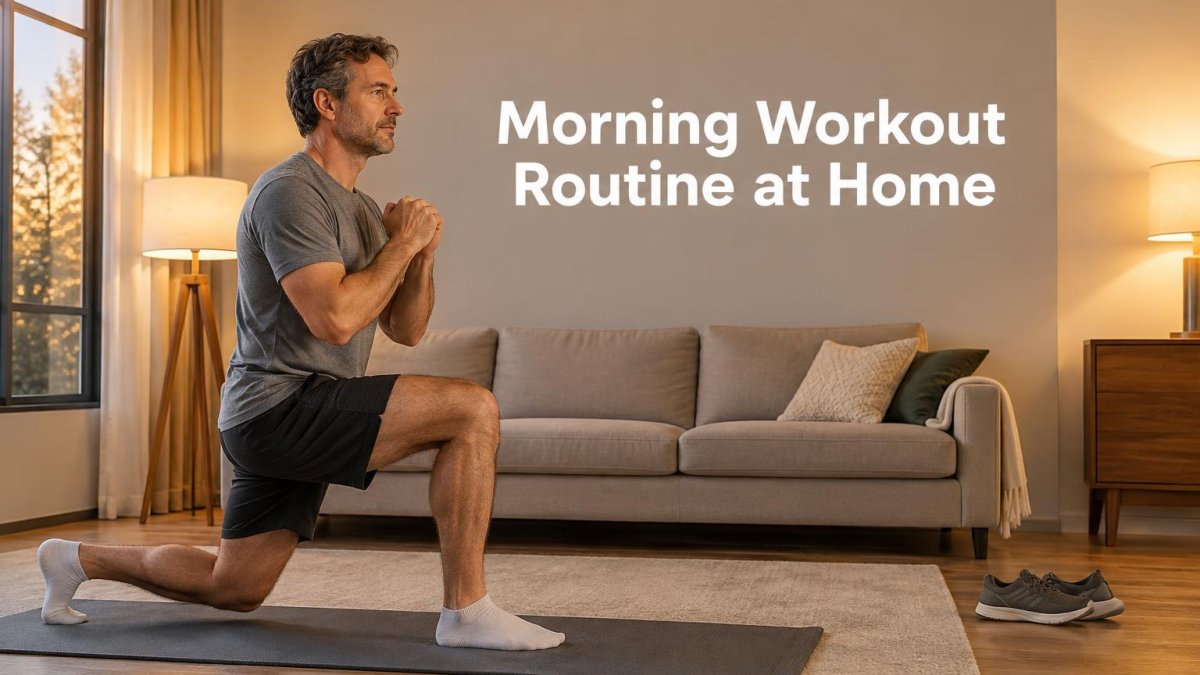
- Reverse lunge. Step one foot back, lower until both knees bend to about 90 degrees, then push through the front heel to return. Alternate legs.
- Glute bridge. Lie on your back with knees bent, then squeeze your glutes and lift your hips until your body forms a line from shoulders to knees. Lower slowly.
Upper body and core exercises
- Push up. Hands under shoulders, body straight, lower your chest toward the floor and press back up. Use an incline or drop to your knees if needed.
- Forearm plank. Hold a straight line from head to heels with elbows under shoulders. Squeeze your glutes and don’t let your hips sag.
- Dead bug. Lie on your back with arms up and knees bent over hips. Lower the opposite arm and leg toward the floor, then switch sides slowly.
Sets, reps and rest times
Here’s how the structure breaks down. A rep is one full repetition of a move, and a set is a group of reps done before resting.
- Work: 40 seconds per exercise
- Rest: 20 seconds between exercises
- Rounds: 2 full rounds of all six moves
- Rest between rounds: 30 to 60 seconds
- Total time: about 12 to 13 minutes
Aim for a pace where you could say a short sentence but not sing. That effort level is moderate to hard, and it’s enough.
Step 3: Cool Down and Stretch
Five minute morning stretch routine
A cool down lets your heart rate settle and gives tight muscles a chance to lengthen. This morning stretch routine also works on its own on days you don’t feel like a full session. Breathe slowly and never push into sharp pain.
- Child’s pose: 45 seconds, hips back toward your heels, arms stretched forward.
- Half-kneeling hip flexor stretch: 30 seconds per side, tucking your pelvis under.
- Seated hamstring stretch: 30 seconds per side, reaching toward your toes with a long spine.
- Doorway chest stretch: 30 seconds, forearm on the frame, gently turning away.
- Seated spinal twist: 30 seconds per side, turning from your ribs, not your neck.
How to Adjust the Routine to Your Level
Beginner modifications
Looking for the best morning exercises for beginners? These same six moves work, just made easier. The aim is smooth technique first. Speed and volume can wait.
- Cut work time to 30 seconds and extend rest to 30 seconds.
- Do one round for the first two weeks.
- Squat to a chair and stand back up for support.
- Make push-ups easier by placing your hands on a counter or couch.
- Hold the plank from your knees, or swap in a wall plank.
- Replace reverse lunges with static split squats if balance is shaky.
Ways to make it harder as you progress
Progressive overload simply means gradually asking your body to do a bit more over time. It’s the reason strength improves. Change one variable at a time so you can tell what works.
- Add a third round.
- Lengthen work intervals to 45 or 50 seconds.
- Slow squats to a three-second lowering phase.
- Try single-leg glute bridges or pause-squats.
- Move to full push-ups, then feet-elevated push ups.
- Wear a loaded backpack for squats and lunges.
Building the Habit and Sticking With It
Sleep, water and a light pre workout breakfast
Sleep is the quiet foundation here. If you’re cutting your night short to exercise, you’re borrowing from the same account you’re trying to fill. Move your bedtime earlier by 20 or 30 minutes so the earlier alarm doesn’t cost you rest.
Drink a glass of water when you wake, since you’ve gone hours without any. If you get hungry or lightheaded exercising on an empty stomach, eat something small about 20 to 30 minutes ahead, such as a banana or a slice of toast. I’ve been writing fitness content for two years, and the advice I keep returning to is that simple, repeatable habits beat elaborate ones.
Common mistakes to avoid
Most morning routines fail for ordinary reasons, not dramatic ones. Watch for these:
- Starting too ambitiously. Six days a week in week one usually ends by week three. Begin with three.
- Skipping the warm up. Stiff mornings punish rushed starts.
- Chasing exhaustion. You should finish tired but capable, not wrecked.
- Waiting for motivation. Tie the workout to something fixed, like brushing your teeth, and let routine do the work.
- Ignoring pain. Muscle burn is normal. Sharp or joint pain means stop, and consider checking with a doctor.
Frequently Asked Questions
1.How long should a morning workout routine be?
For most people, 15 to 30 minutes is plenty. This 20 minute plan is long enough to train your whole body and short enough to repeat consistently. On busy days, the warm-up plus one round of the circuit still counts.
2.Is it better to work out in the morning on an empty stomach?
It depends on you. Some people feel fine exercising fasted for a short, moderate session like this one, while others feel weak or dizzy. If you’re in the second group, have a small snack first, and talk to a doctor if you have a medical condition such as diabetes.
3.Can I build muscle with a morning home workout and no equipment?
Yes, especially as a beginner. A bodyweight morning workout challenges your muscles enough to grow when you gradually increase reps, slow your tempo or move to harder variations. Over time, you may need added resistance such as a backpack, bands or dumbbells to keep progressing.
4.How many days a week should I do a morning workout?
Start with three non-consecutive days, such as Monday, Wednesday and Friday. Once that feels easy, move to four or five days, using the stretch routine alone on lighter days. Rest days matter because your body adapts during recovery.
5.What should I eat or drink before a morning workout at home?
Start with a glass of water. If you want food, choose something light and easy to digest, like a banana, a small bowl of oatmeal, or toast with a little peanut butter. Save the bigger breakfast for after you finish.